
Two indigenous extremophiles are being used in the project to convert methane and carbon dioxide into a protein-rich biomass. Extremophiles are microorganisms, including bacteria and algae, that live in conditions humans consider ‘extreme’, e.g. high temperature, acidity, salinity and pressure.
The project’s microbes were sourced from geothermal features at Parariki, in the Rotokawa geothermal area. This land is within the rohe of Tauhara North No.2 Trust (TN2T), who are the project lead and co-funder.
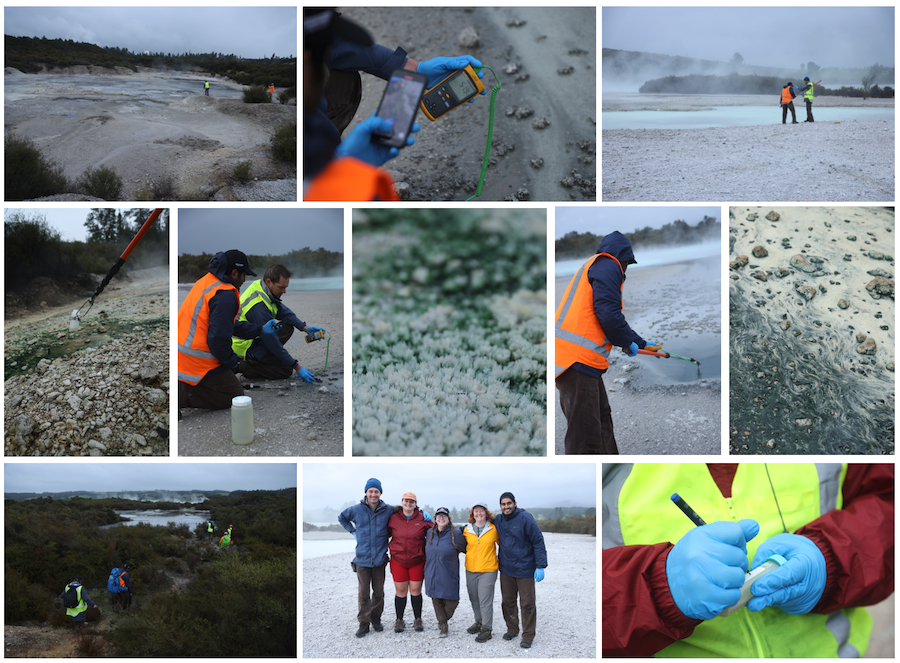
In June 2025, members of our team joined Prof. Matthew Stott and some of his post-graduate students on a sampling trip to Parariki and other sites at Rotokawa. They were searching for thermoacidophiles—microorganisms that live in hot and acidic conditions. The sampling team recorded the environmental conditions where each sample was collected, so they can replicate the conditions back in the lab and isolate and grow different species.
The varied environments visited included scratchy bush tracks, fumaroles, and milky green, blue and steaming hot springs. The high temperature, acidity and silica also produces sinter deposits, and results in beautiful formations.
Note: Geothermal ground can be unstable and dangerously hot. This fieldwork was undertaken by trained and experienced people. Do not leave the paths or boardwalks at any time when visiting a geothermal area.

